
How Much Does a Commercial Padel Court Cost?
17 October 2025
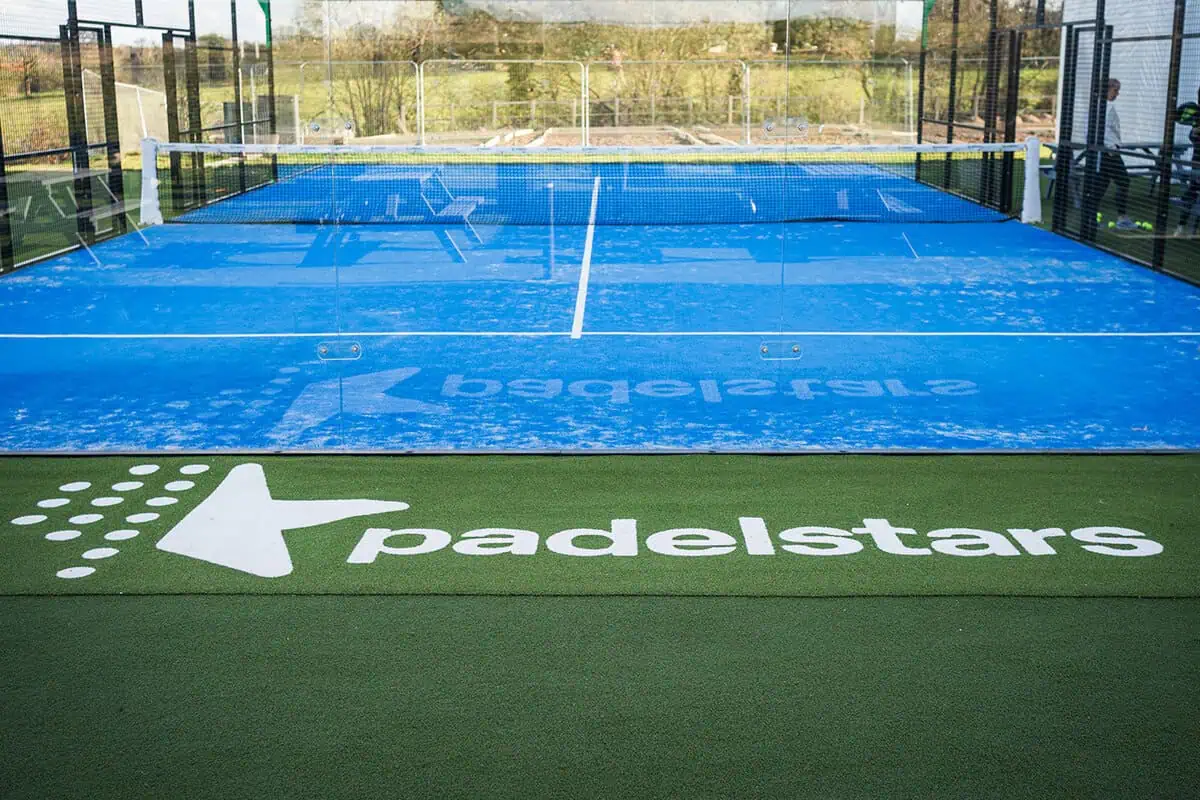
How Much Does a Commercial Padel Court Cost? Complete UK Installation and Investment Guide
A commercial padel court is a purpose-built sports facility designed for public hire, coaching, and events. A typical UK installation costs roughly between £45,000 and £80,000 per court.
This guide, by the #1 UK padel court builder, explains commercial padel court costing, construction cost drivers, likely revenue streams, and practical funding routes to help venue owners and developers make informed decisions.
Many investors struggle to compare quotes because prices vary by groundworks, materials, indoor versus outdoor specification, lighting, and ancillaries; this article breaks those variables down clearly. You will also find simple ROI guidance, funding options, including the LTA Quick Access Loan Scheme, and why a turnkey partner can reduce risk.
The guide covers average costs, component-level cost drivers, profitability scenarios, financing paths, and a short supplier checklist so you can move from initial estimate to a formal quote.
Read on to understand cost ranges, what influences price, and the next practical steps for a commercial padel project in the UK.
What Is the Average Cost to Build a Commercial Padel Court in the UK?
A typical commercial padel court in the UK usually costs between £45,000 and £80,000 per court, depending on specification, site conditions, and whether the court is permanent or portable.
This range generally includes the court structure, standard artificial turf, tempered glass or mesh panels, basic lighting, and installation labour, while it may exclude complex groundworks, planning fees, and high-end ancillaries. Understanding that price bands reflect different inclusions helps procurement: an entry-level outdoor court uses simpler foundations and standard turf, while premium panoramic courts add tempered glass and higher-spec surfacing.
The following table summarises typical per-court cost bands for quick reference, and the brief notes below show what each band commonly includes and omits to guide initial budgeting.
Different court types have distinct cost bands and included items:
| Court Type | Typical Cost Range | Typical Inclusions |
|---|---|---|
| Entry-level outdoor | £45,000 – £55,000 | Basic sub-base, standard turf, mesh fencing, basic lighting |
| Standard turnkey | £55,000 – £70,000 | Improved foundation, tempered glass panels, branded turf, standard lighting |
| Premium panoramic | £70,000 – £80,000+ | Full panoramic glass, high-grade turf, premium lighting, bespoke finishes |
This table gives a quick budget framework to compare quotes and choose the band that matches your site and business plan. For a tailored estimate, use a cost calculator and downloadable brochure to refine inputs and expectations.
What Are Typical Price Ranges for Commercial Padel Court Construction?
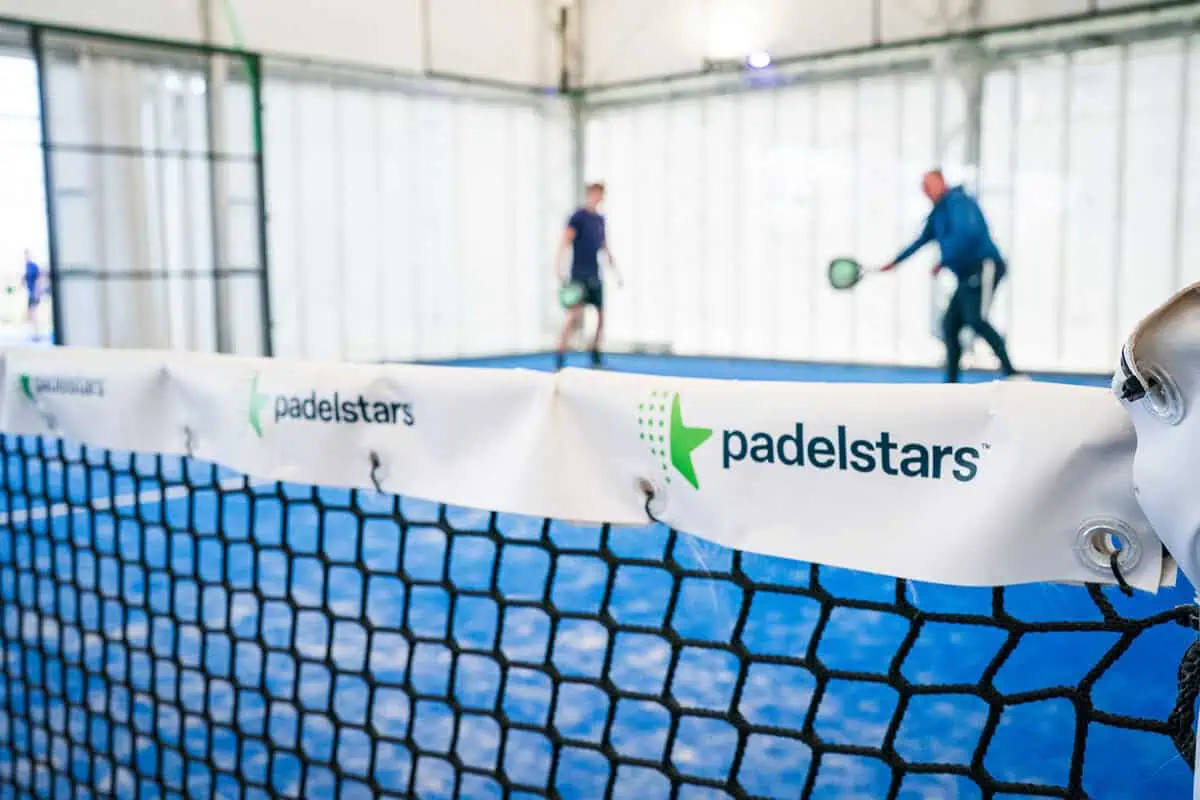
Typical price bands reflect scope and site complexity: entry-level outdoor courts focus on core playability, standard turnkey packages add durability and finish, and premium panoramic options prioritise aesthetics and spectator experience. Entry-level installations assume straightforward ground conditions and minimal planning, which keeps costs lower but may reduce long-term durability. Standard turnkey options include more robust foundations and tempered glass, making them suitable for commercial venues where repeated high use is expected. Premium panoramic courts invest in higher-spec materials and finishes to attract events and sponsorship, which increases upfront cost but can enhance revenue potential.
How Do Indoor and Outdoor Court Costs Differ?
Indoor padel court construction adds building envelope costs—roof, walls, insulation, HVAC, and higher electrical capacity, so indoor installations typically carry a substantial premium over outdoor courts. Outdoor courts need more focus on drainage, sub-base durability, and frost protection, but avoid building-shell costs, which keeps initial spend lower.
Operating costs diverge too: indoor courts require ongoing heating, ventilation, and dehumidification, which raises utilities and maintenance. When comparing quotes, separate the structural (building) and court system costs to see where savings or investments will most affect long-term performance.
How Does the Number of Courts Affect Overall Project Cost?
The number of courts drives economies of scale because fixed costs such as groundworks, access roads, reception, and shared lighting infrastructure are spread across multiple courts.
A single-court project bears a higher per-court share of mobilisation and access works, while a 3–5+ court facility typically reduces per-court cost by reusing foundations, cabling, and support structures. Planning and layout efficiencies also lower per-court installation time and resource churn on multi-court sites.
Consider multi-court planning early to capture these savings and to model revenue aggregation from simultaneous bookings and events.
What Key Factors Influence Commercial Padel Court Construction Prices?
Major cost drivers explain why quotes differ: groundworks and site preparation, material choices (glass panels, turf quality, steel frames), lighting and ancillaries, and planning or regulatory requirements all materially affect the final price.
Each component can be specified at multiple quality levels, where higher quality increases longevity and performance but raises upfront cost. Evaluating trade-offs between initial expenditure and long-term operating cost is essential when targeting ROI.
The following comparison table clarifies core component attributes and typical cost drivers to focus budget discussions with contractors and funders.
Component-level attributes show where money is spent and why:
| Component | Key Cost Drivers | Typical Impact |
|---|---|---|
| Groundworks | Soil type, drainage, excavation depth | High |
| Structure (glass/steel) | Tempered glass vs mesh, frame grade | Medium–High |
| Surface (turf) | Pile height, infill type, shockpad | Medium |
| Lighting & electrics | Lux level, energy efficiency, cabling | Medium |
| Ancillaries | Seating, fencing, CCTV, scoreboards | Low–Medium |
This table highlights that difficult ground conditions and higher-spec structural materials are the largest single cost influencers. Early site surveys help isolate these risks and refine budgets.
How Do Groundworks and Site Preparation Impact Costs?
Groundworks set the baseline for a reliable court because sub-base depth, drainage design, and foundation type determine durability and play performance.
Poor soil or contamination requires deeper excavations, import of engineered fill, or specialist foundations, which significantly increase cost and programme time. Access constraints and site slope add logistic costs and may require retaining structures or staged construction.
Early site investigation and contingency budgeting reduce surprises and support stronger lender or grant applications by demonstrating risk management.
What Are the Cost Differences Between Materials Like Glass, Turf, and Steel Frames?
Material choice balances cost, aesthetics, and maintenance: tempered glass panels enhance spectator visibility and a premium feel but cost more upfront and require specialist installation and maintenance. Artificial turf options vary by pile height and infill; higher-spec turf improves ball behaviour and reduces replacement frequency but increases initial outlay.
Steel frame quality affects long-term stability; heavier-gauge frames resist wear in high-use commercial settings with lower lifetime maintenance.
How Do Lighting and Ancillary Equipment Affect the Final Price?
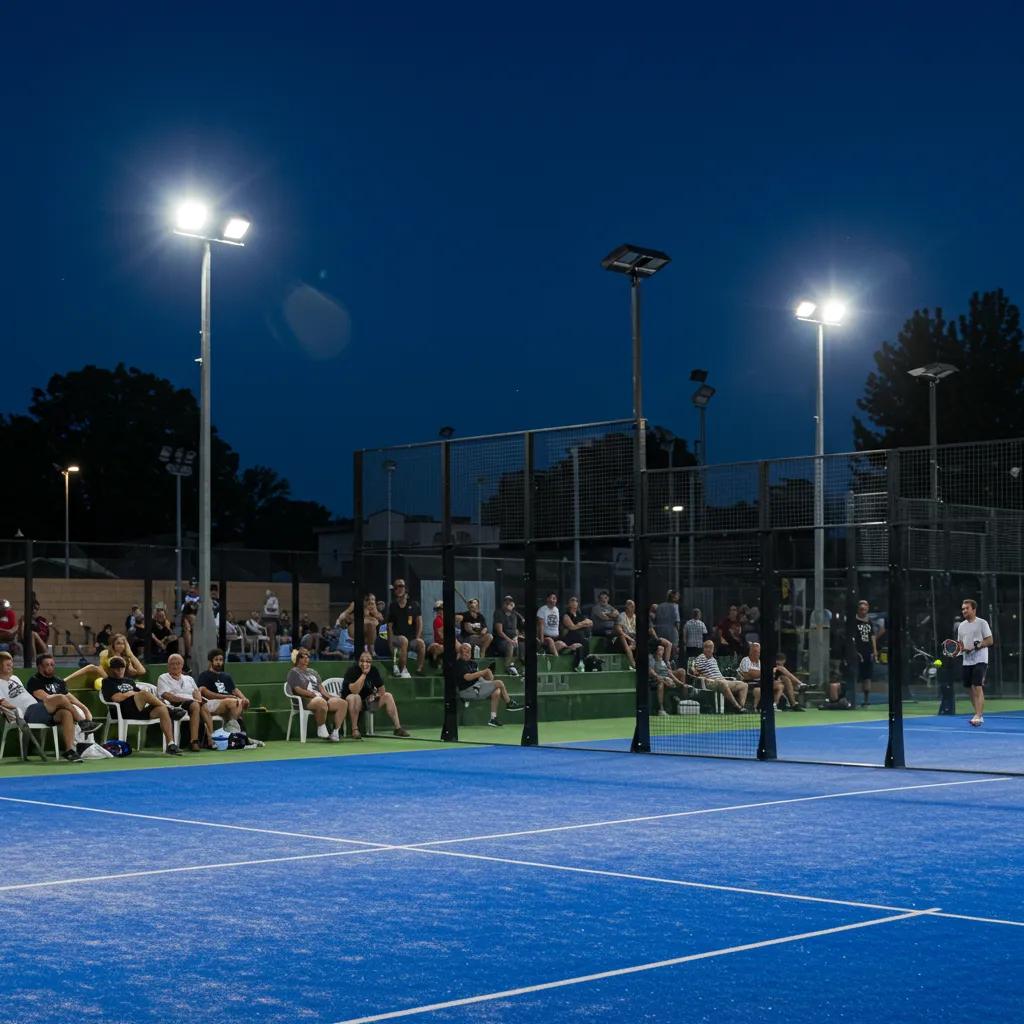
Lighting and ancillaries—floodlighting, power distribution, seating, fencing, and security—are essential to usable hours and customer experience and therefore influence both cost and revenue potential. Higher lux levels and energy-efficient LED systems cost more initially but reduce operating expenses and support evening bookings.
Optional extras such as scoreboards, CCTV, and covered spectator areas improve event hosting capability and sponsorship appeal. Phasing ancillaries over time can manage upfront capital while still enabling commercial operation from day one.
- Consider energy-efficient lighting to lower lifecycle costs.
- Prioritise essential ancillaries for initial opening and add premium options later.
What Are the Planning Permission and Regulatory Costs in the UK?
Planning permission and regulatory requirements vary by local authority and site; costs include application fees, surveys (ecology, tree, flood), and consultant time, which can extend project timelines and budgets. Typical conditions may cover lighting spill, acoustic mitigation, and public access, and some projects will need pre-application engagement to reduce refusal risk.
Working with a construction partner familiar with UK planning processes reduces administrative burden and helps present stronger planning submissions.
Engaging early with planners reduces delays and clarifies likely regulatory costs.
How Profitable Is Investing in a Commercial Padel Court? Understanding ROI and Revenue Potential
Yes — investing in a commercial padel court is often profitable when utilisation, pricing, and ancillary revenues are well modelled; revenue streams typically cover operating costs and repay capital within a realistic timeframe.
Revenue depends on court hire, coaching, memberships, events, and ancillary sales, while costs include maintenance, staffing, and utilities. A simple ROI model subtracts annual operating expenses from gross revenue and divides by construction cost to estimate payback.
The following table presents a compact revenue snapshot to guide conservative, realistic, and optimistic scenarios for early-stage modelling.
Revenue streams can be modelled to estimate annual income and payback:
| Revenue Stream | Typical Monthly Income | Notes |
|---|---|---|
| Court hire | £2,000 – £5,000 | Based on utilisation and price per hour |
| Coaching & academy | £1,500 – £4,000 | High-margin recurring income |
| Events & tournaments | £500 – £2,000 | Variable, boosts demand |
| Ancillaries (F&B, retail) | £300 – £1,200 | Enhances customer spend |
This snapshot helps create payback timelines; combined steady bookings and coaching often produce a multi-year payback that improves with scale and ancillary development.
What Revenue Streams Can Commercial Padel Courts Generate?
Commercial padel courts generate income from court bookings, coaching programmes, memberships, tournaments, and ancillary sales such as equipment and F&B.
Court hire is typically the principal income source with predictable hourly revenue, while coaching and academies deliver high-margin, repeatable income and drive utilisation. Events and tournaments create spikes in revenue and marketing exposure that support sponsorship opportunities.
Ancillary sales increase average spend per visit and improve overall profitability.
How Is Return on Investment Calculated for Padel Court Projects?
Return on investment is calculated by subtracting annual operating costs from annual revenue to find net operating income, then dividing net income by total construction cost to produce ROI; payback period is the construction cost divided by annual net income.
Key inputs include utilisation rate (hours booked per week), price per hour, average coaching revenue, and fixed operating expenses. Running conservative and optimistic scenarios helps investors understand sensitivity to demand and pricing and supports conversations with lenders.
What Is the Typical ROI Timeline for Commercial Padel Courts in the UK?
Typical ROI timelines vary, but many commercial projects aim for payback within 3–7 years, depending on utilisation, pricing strategy, and ancillary income.
High-traffic urban locations with strong coaching programmes and event schedules shorten payback, while remote sites or single-court projects extend it. Factors that accelerate ROI include multi-court layouts, strong community engagement, and diversified revenue; risks include low utilisation and unexpected maintenance.
Careful financial modelling and staged investment reduce downside and clarify realistic timelines.
What Funding and Financing Options Are Available for Commercial Padel Court Projects?
Funding options combine public schemes, private loans, and leasing to match project size and risk profile; understanding eligibility and preparing accurate cost estimates are essential before approaching funders. The LTA Quick Access Loan Scheme is a named support route that helps clubs and providers access funding for facility development, while private financing and equipment leasing provide alternative capital structures.
Preparing detailed project budgets, cash flow forecasts, and contractor quotes strengthens applications and improves lender confidence. Below is a short list of common funding routes and practical next steps to pursue them.
Common funding and financing routes include:
- LTA Quick Access Loan Scheme: Targeted loans for facility projects, which are eligible for clubs and providers.
- Private commercial loans: Traditional bank lending based on credit and business plan.
- Leasing and staged payments: Equipment or phased construction to spread capital cost.
These routes can be combined to match timing and cashflow needs, and working with a construction partner helps present cohesive applications.
How Does the LTA Quick Access Loan Scheme Support Padel Court Construction?
The LTA Quick Access Loan Scheme offers targeted lending to clubs and facility providers to accelerate court build projects and increase participation; it typically supports capital works, equipment, and facility upgrades.
Eligible organisations can use loans to fund construction, and the scheme reduces upfront funding barriers for community-focused projects. Combining a clear business plan with contractor estimates improves the chance of a successful application and aligns project costings with lender expectations. For guidance on preparing applications and aligning construction timelines with funding, a specialist construction partner can offer assistance.
What Private Financing and Leasing Options Exist for Padel Court Investors?
Private financing includes bank loans, commercial mortgages, and asset leasing arrangements where equipment or staged construction payments reduce initial capital needs.
Leasing can be attractive for portable or temporary courts, spreading the cost and allowing flexibility for events. When seeking private finance, lenders will request detailed forecasts, contractor quotes, and contingency planning; presenting realistic utilisation and revenue models improves outcomes. Preparing these documents with professional support enhances credibility and speeds approval.
- Lofthouse Padel Court Specialists can assist clients with finance readiness, documentation, and project budgets, and offer a downloadable Padel Court Brochure to support applications and stakeholder discussions.
Why Choose Lofthouse Padel Court Specialists for Your Commercial Padel Court Construction?
Lofthouse Padel Court Specialists provides turnkey padel court solutions that manage planning, groundworks, construction, and finishing to simplify delivery and reduce client risk. As part of a wider construction group, the company offers both permanent and portable court options with full panoramic courts and various surface materials to match site goals and budgets.
Their service model is designed to coordinate planning permission guidance, detailed specifications, and construction oversight to keep projects on track and aligned to commercial objectives. Lofthouse also publishes tools to support early-stage decision making, including a Padel Court Cost Calculator and a downloadable Padel Court Brochure for prospective clients.
How Do Lofthouse’s Turnkey Solutions Simplify Padel Court Building?
Lofthouse’s turnkey approach covers initial planning, site surveys, groundworks, installation, and handover, creating a single point of accountability for complex projects.
This reduces client management overhead and clarifies scheduling, procurement, and quality control through one coordinated supply chain. A single contractor model reduces the risk of gaps between trades and helps maintain consistent standards across civil works, structure, and finishes.
Requesting a free consultation clarifies the scope, timeline, and likely costs so investors can make decisions with confidence.
What Quality Materials and Customisation Options Does Lofthouse Offer?
Lofthouse offers material choices including tempered glass panoramic panels, a range of artificial turf specifications, and robust steel frame systems, allowing clients to balance aesthetics, performance, and budget. Customisation options include branded surfacing, lighting specifications, and accessory packages tailored to event, coaching, or membership models.
Material choices are presented with sample specifications and lifecycle considerations to help clients choose the best long-term value. These options support building permanent padel courts or portable and temporary padel courts, depending on client needs.
Turning Cost Estimates Into a Clear Construction Plan
Building a padel court in the UK involves many moving parts — from accurate site surveys and planning approvals to quality materials, groundworks, and ongoing maintenance. While headline figures give a useful benchmark, every site’s access, drainage, and specification requirements can shift the final cost significantly.
Partnering with specialists experienced in LTA- and SAPCA-compliant padel court construction ensures that technical standards, safety, and long-term performance are built into every stage. Whether you’re developing a private residential court or a multi-court commercial facility, early planning, clear documentation, and sound project management are key to staying on budget and meeting timelines.
Lofthouse Padel Court Specialists provide a complete turnkey service, from feasibility and design to installation and handover, so you can move confidently from estimate to execution. Contact the team today to arrange a site consultation or download a brochure to start planning your project.
FAQs: Padel Court Construction and Costs in the UK
1. Do you need planning permission to build a padel court?
In most cases, yes — especially for new outdoor courts, floodlighting, or enclosures. Requirements vary by local authority, so early consultation with the planning department or a specialist advisor is recommended. Temporary or small-scale domestic courts may be eligible for permitted development, but this must be confirmed in writing.
2. How long does it take to build a padel court?
For a straightforward outdoor installation, the build itself can take 6–8 weeks, provided planning and groundworks are already complete. Indoor or multi-court commercial projects can extend to 3–6 months, depending on structure, utilities, and material lead times.
3. What are the maintenance requirements?
Expect to replace the artificial turf every 5–10 years and budget for periodic cleaning of glass panels, net tensioning, and lighting inspections. Setting aside roughly 2–5% of the initial capital cost annually helps maintain playing quality and safety compliance.
4. Can existing tennis or sports courts be converted into padel courts?
Yes. Many developers convert underused tennis courts or multi-use games areas into padel courts by adjusting the footprint and adding a padel-specific enclosure and surfacing. Conversion can reduce costs compared with new groundworks.
5. What funding is available for padel courts?
The Lawn Tennis Association (LTA) offers support through its Padel Development Fund and other sport-body initiatives aimed at community clubs. Combined with private financing or staged payments, this can significantly reduce upfront costs.
LTA Padel Court Construction Guidance (2025)
6. How do indoor and outdoor courts compare for year-round play?
Outdoor courts are cheaper to install but weather-dependent, while indoor courts provide consistent conditions, higher utilisation rates, and greater ROI for commercial operators. The trade-off is a higher upfront cost and operational expenses.
7. What factors most affect total cost?
Key drivers include site access, ground conditions, specification level (indoor/outdoor), lighting, and regulatory requirements. Obtaining a professional site survey early gives the most reliable quote.
Lofthouse Padel Court Specialists
Looking to bring padel to your home, school, or sports facility?
At Lofthouse Padel Court Specialists, we design and build premium courts tailored to your space, goals, and budget. From planning permission to professional installation, we handle everything with expertise and care.
Get in touch today to start your padel court project with trusted UK specialists.
Lofthouse Padel Court Specialists was established by David Lofthouse to make padel courts more available throughout the UK.
Build your padel court
Lofthouse Padel Court Specialists specialise in designing and building padel courts.
From the initial idea to the completed padel court, we do everything. Get in touch today and get your padel court built.
Request a Padel Brochure
Curious about building a Padel court?
Request our FREE brochure to explore court options, pricing insights, and what’s included—everything you need to plan your ideal padel facility.